
ComicID: Comic Book Scanner
The App DudeComics
3.925.00 Reviews
- Version
- 1.7
- Installs
- 10.00K
- Age Rating
- Everyone
Screenshots
Our Review of ComicID: Comic Book Scanner
 Analysis by Appyee
I like the idea of having one shared place to check a comic collection, especially when several people in a household buy, borrow, or sort books together. A scanner can make the first pass less tedious than typing every issue into a spreadsheet, but I would still treat any value it shows as a starting point rather than a final price. That distinction matters if you are making decisions about selling, insurance, or splitting a collection.
Comic Scanner - Book Value is a free comics app from The App Dude, with optional in-app purchases priced from $4.99 to $18.99 per item. It has a 3.7 average from around 100 ratings, and more than 10,000 installs. Those figures suggest that it has found an audience, though I would not take them as proof that every scan will match a particular book or edition. The app is rated for Everyone, runs on Android 7.0 or later, and its current version is 1.3.
A useful shared task, not a shared account system
Imagine a rainy afternoon when someone pulls a box of comics from a closet and the family decides to sort it before donating or selling anything. A barcode scan can help identify books faster than looking up each title manually, while a catalog gives everyone a common reference for what has been entered. That is the kind of small, practical job where this app makes sense: one person scans, another checks the printed issue details, and the group can discuss what to keep or investigate further.
I would not assume that a catalog automatically coordinates multiple people or devices. For a shared collection, agree on who is responsible for adding books and how you will handle duplicates before a long scanning session. If two people independently enter the same issue, or one scans a borrowed book as part of the household collection, the catalog can become less useful as a record. A simple paper note or shared checklist alongside the app can prevent that confusion.
Keep ownership and value decisions clear
Household use also raises a boundary question: does an entry mean “owned by everyone,” “owned by one person,” or simply “we looked this up”? I would decide that before relying on the catalog for a move, sale, or inheritance discussion. The app can help with identification and collection tracking, but it should not be treated as an agreement about ownership or a replacement for a careful inventory when those details matter.
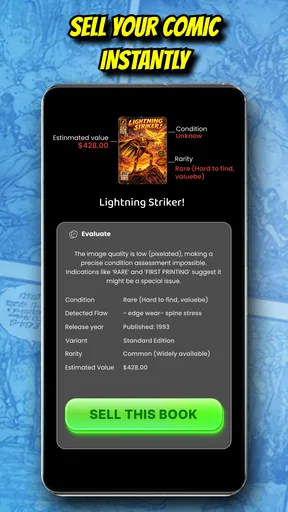
For younger readers, the Everyone age rating makes the app suitable in its content classification, but adults should still guide any buying or selling decisions. A displayed estimate is not a promise that a shop, collector, or online buyer will pay that amount. I would use the app to narrow down what deserves closer research, then compare the exact edition, condition, and current offers before putting a price on a valuable book.
If you are choosing between a scanner, a spreadsheet, and browsing comic marketplaces manually, each has a different strength. Scanning reduces repetitive entry when a barcode is available; a spreadsheet gives you more control over custom fields such as owner, condition, or storage box; marketplace research is better for checking what similar copies are actually being offered or sold for. I see the app as a convenient first step, not a reason to stop doing those checks.
Getting Started with Comic Scanner
First things first, downloading the Comic Scanner - Book Value app was a breeze. It's available on both Android and iOS, so no matter what kind of device you're rocking, you're covered. Once installed, I was greeted by a clean, intuitive interface that didn't require a manual to figure out.
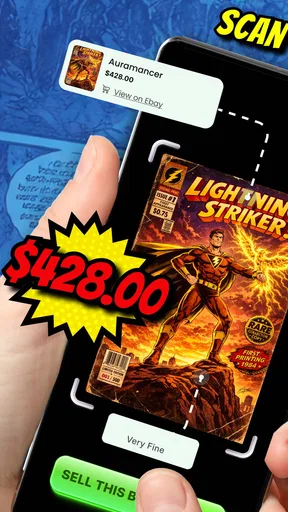
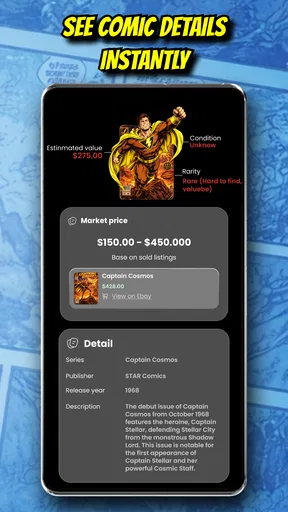
The app allows you to scan the barcode of your comics to quickly retrieve their current market value. This feature alone is a game-changer. No more sifting through endless websites or outdated guides; just a quick scan and boom, you have the info you need. The scanning process was super fast and accurate, which is a huge plus.
Exploring the Features
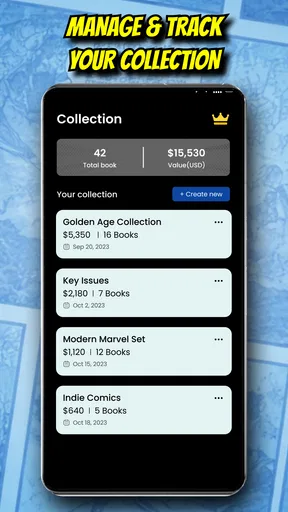
Beyond just scanning, the app offers some nifty features that make it stand out. It lets you create a personalized catalog of your collection. I found this particularly useful for keeping track of what I own and what I still need to hunt down. The catalog is easy to navigate, and you can sort your comics by various criteria such as title, issue number, or publisher.
Another feature that caught my eye was the market trends section. The app provides insights into the comic book market, showing how values are shifting over time. This is perfect for those of us who like to keep an eye on potential investment opportunities or simply want to stay informed about our favorite hobby.
User Experience and Performance
I was impressed by how smoothly the app runs. There were no lags or crashes during my time using it, which is always a relief. Navigating through different sections was seamless, and the app's design is visually appealing without being cluttered.
One thing I appreciated was the app's ability to work offline. While you do need a connection to initially download the market data, once it's on your device, you can access your catalog and previously scanned comics without needing Wi-Fi or data. This is ideal for when you're at a comic con or a store with spotty reception.
Use scans as a shortlist, then verify the book
The most helpful way to use a barcode result, in my view, is as a shortcut to the likely title and issue, not as a substitute for checking the physical copy. Comics can have editions, reprints, or variants that look similar at a glance. Before you act on a result, compare what the app identifies with the cover and printed details in your hands. If the match is uncertain, record the item for later research rather than letting a quick scan settle the question.
Condition is another reason to be cautious about treating a value as a guaranteed offer. A reader copy with worn edges and a clean, carefully stored copy may not be comparable even if they share a barcode. When sorting a collection, I would note condition separately in a notebook or spreadsheet if it will affect a decision. That extra step is especially useful when a household is handling books that belong to different people or deciding which issues merit a closer look.
A practical workflow is to scan in small batches, then review the catalog before moving on to the next box. Keep a temporary “needs checking” group outside the app for books whose barcode is damaged, missing, or difficult to match. This avoids spending a long session repeatedly trying the same awkward issue and helps prevent uncertain identifications from blending into a list of confirmed entries. The app is most valuable when it speeds up routine identification while leaving room for human checking.
Where the estimates fit—and where they don't
The market-trend view can be useful for spotting which books deserve attention, but I would not use it alone to time a sale or forecast a return. A broad movement in comic values does not necessarily describe the exact copy on your shelf. For a sale, compare the edition and condition with current listings or completed transactions where available, and remember that asking prices are not the same as money a buyer has actually paid.
This is also where the app differs from a dedicated marketplace. A marketplace is built around browsing listings and contacting sellers or buyers; a scanner-led catalog is more convenient for taking stock of what you already have. If your main goal is to find a specific issue at the lowest price, I would search marketplaces directly. If your goal is to turn a pile of books into a more manageable inventory, the app's scan-and-catalog approach is the better fit.
The free starting point makes it easy to see whether the workflow suits your collection, but I would consider optional purchases only after trying the basic routine and deciding what is missing for your needs. The listed per-item range runs from $4.99 to $18.99, so it is worth checking the purchase details in the app before committing. If all you need is a one-time count of a modest stack, a spreadsheet may be enough; regular collectors who repeatedly identify and review books may get more use from a dedicated scanner.
Who will get the most from it
I think this is best for someone who already owns enough comics that memory is no longer a reliable catalog. It can also help a casual collector who has inherited a box and wants a first pass before deciding what to keep, research, or sell. The app is less compelling for a person who owns only a handful of books, already maintains a detailed spreadsheet, or needs precise condition grading and sale-price research rather than quick identification.
It is not the right tool for settling a disagreement about ownership, providing a formal appraisal, or guaranteeing a sale price. In those situations, a carefully documented inventory and advice from a knowledgeable comic shop or specialist will be more appropriate. I would also avoid using a scan as the only record of an especially valuable item; keep your own notes about its condition and where it is stored.
User Experience and Performance
I was impressed by how smoothly the app runs. There were no lags or crashes during my time using it, which is always a relief. Navigating through different sections was seamless, and the app's design is visually appealing without being cluttered.
One thing I appreciated was the app's ability to work offline. While you do need a connection to initially download the market data, once it's on your device, you can access your catalog and previously scanned comics without needing Wi-Fi or data. This is ideal for when you're at a comic con or a store with spotty reception.
A sensible household routine
For a family or group of roommates, I would make one person the catalog keeper and let others help with the physical sorting. Before scanning, set aside books that are borrowed, on loan, or owned by someone individually. After each box, check the entries together and make a separate note of anything that needs a second identification or a condition check. This simple division of work keeps the catalog useful without assuming the app has household profiles or shared-account tools.
Offline access is especially handy when reviewing an already cataloged collection away from home, but I would plan the initial data-dependent lookup before heading somewhere with poor reception. At a convention or a shop, use the saved information as a reference and verify the actual issue in front of you. That makes the app a practical companion for browsing without confusing an old lookup with a current offer or a confirmed purchase.
Final Thoughts
So, is the Comic Scanner - Book Value app worth your time? In my humble opinion, absolutely. It's a handy tool for anyone serious about their comic book collection. The app not only simplifies the process of valuing and cataloging your comics but also offers insights that can help you make informed decisions.
While no app is perfect, Comic Scanner - Book Value comes pretty close for what it sets out to do. Whether you're a seasoned comic book aficionado or just starting your collection, this app is a valuable companion. So, give it a whirl, and happy collecting!
Privacy and Permissions
See what permissions an app requests and how it handles your data.
- Photos/Media/Files
- read the contents of your USB storage, modify or delete the contents of your USB storage
- Storage
- read the contents of your USB storage, modify or delete the contents of your USB storage
- Camera
- take pictures and videos
- Other
- view network connections, full network access, control vibration, prevent device from sleeping, Google Play license check
Verdict
Strengths of ComicID: Comic Book Scanner
- Accurate comic book valuations.
- Fast and easy barcode scanning.
- User-friendly interface design.
- Regular database updates.
- Secure data storage.
Limitations of ComicID: Comic Book Scanner
- Requires a stable internet connection.
- Limited offline functionality.
- Occasional ads can be disruptive.
- Some rare comics not listed.
- Premium features are costly.
Other Releases by The App Dude
View All
Sports Card Value Scanner
Sports4.4
Similar Picks in This Category
View All
WEBTOON: Manga, Comics, Manhwa
NAVER WEBTOON4.6

MangaToon: Comic & Manga
MangaToon4.3

네이버 웹툰 - Naver Webtoon
NAVER WEBTOON4.3

Tapas – Comics and Novels
Tapas Entertainment Inc.4.2

Lezhin Comics - Daily Releases
LEZHIN ENTERTAINMENT3.3

WebComics - Webtoon & Manga
WEBCOMICS HOLDINGS HK LIMITED4.4
Frequently Asked Questions
What is Comic Scanner - Book Value, and what does it do?
Comic Scanner - Book Value is an app designed to help comic book enthusiasts manage and evaluate their collections. By scanning the barcode of a comic, users can instantly access information like current market value, edition details, and more. It's a valuable tool for collectors looking to keep track of their inventory and make informed purchasing or selling decisions.
Is Comic Scanner - Book Value available on both Android and iOS?
Yes, Comic Scanner - Book Value is available for both Android and iOS platforms. Users can download the app from Google Play Store for Android devices and the Apple App Store for iOS devices. This makes it accessible to a wide range of users, no matter their preferred device.
How accurate is the market value information provided by the app?
The app uses a comprehensive database that is regularly updated to provide the most current and accurate market values for comic books. However, prices can fluctuate due to various factors, and while the app strives for accuracy, users should verify prices with additional sources before making significant financial decisions based on the information.
Can I track my entire comic book collection with this app?
Absolutely! Comic Scanner - Book Value allows users to catalog their entire comic book collection efficiently. With features that let you organize and categorize your comics, the app also offers tools to manage inventory, track values over time, and even export your collection details for backup or sharing purposes.
Does the app require any in-app purchases or subscriptions?
While Comic Scanner - Book Value offers a range of free features, there may be premium options available that require in-app purchases or a subscription. These premium features typically include advanced tools and ad-free experiences. Users should check the app's store listing for detailed pricing and subscription information before downloading.
